
Services
Whether you’re recovering, managing pain, or working toward better performance, our care team will help connect you with the right support.
Our Clinical Team
Learn about physiotherapy, registered massage therapy, and kinesiology, including what each profession assesses, the treatments they offer, and when we suggest one or a combination.
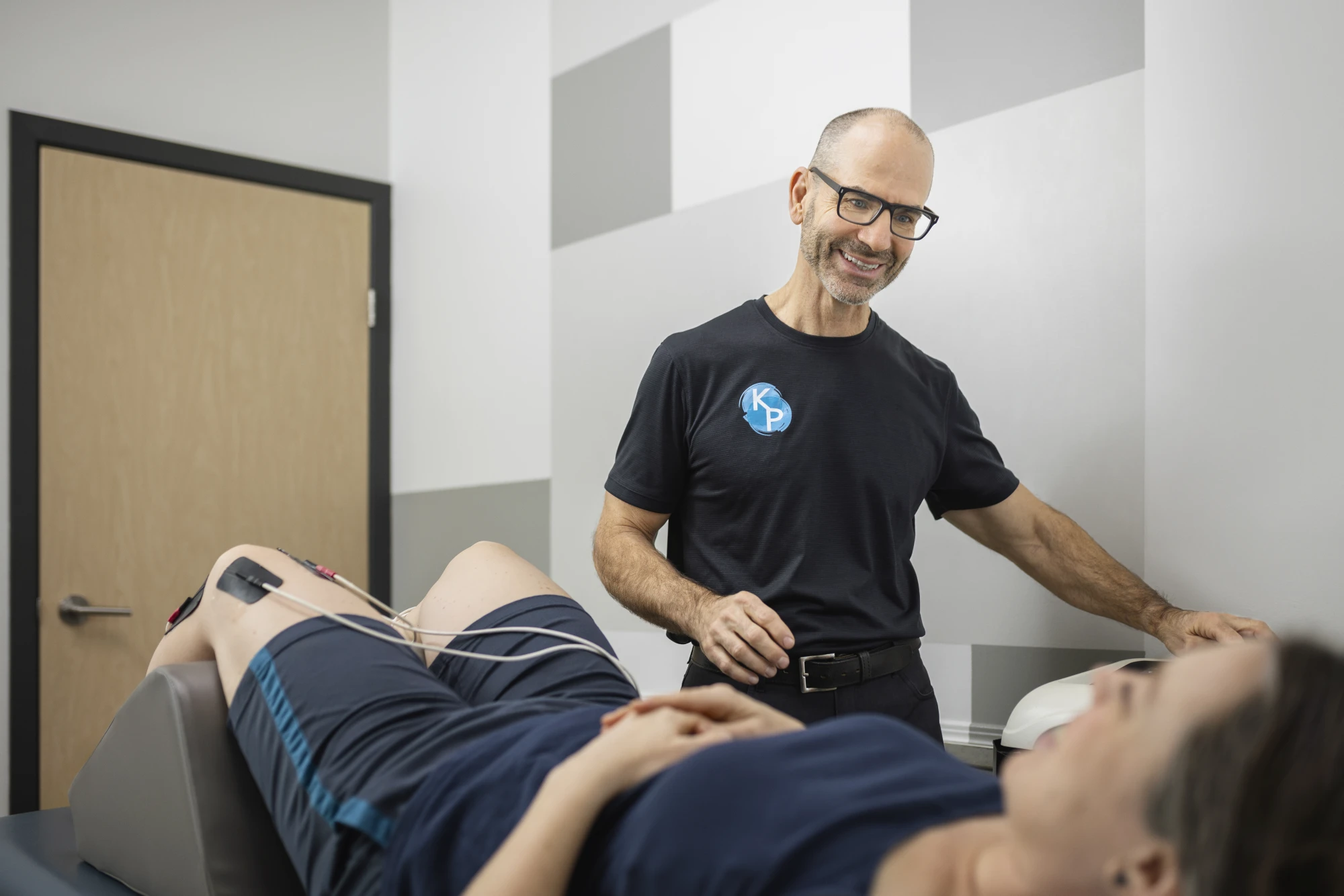
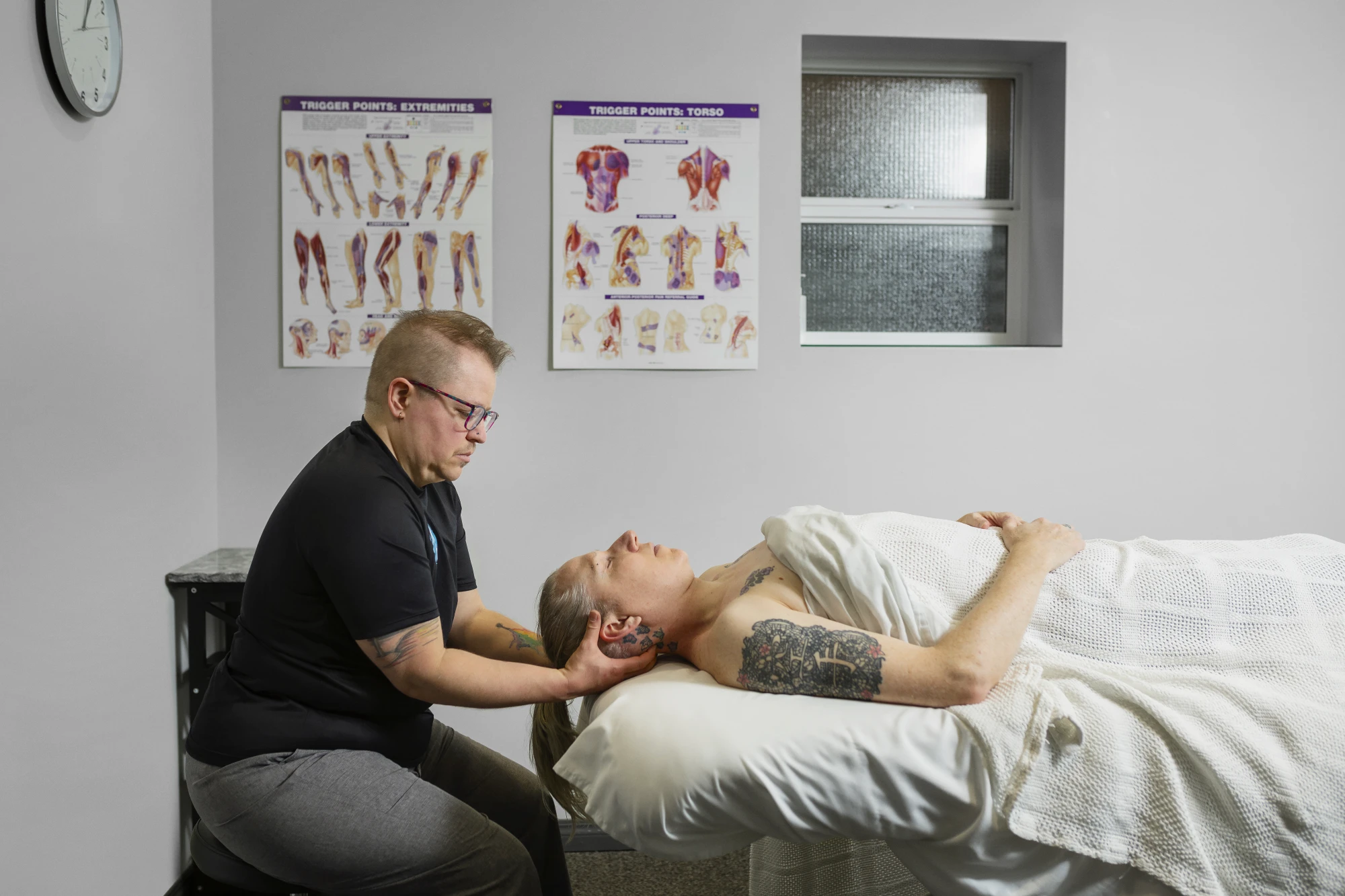
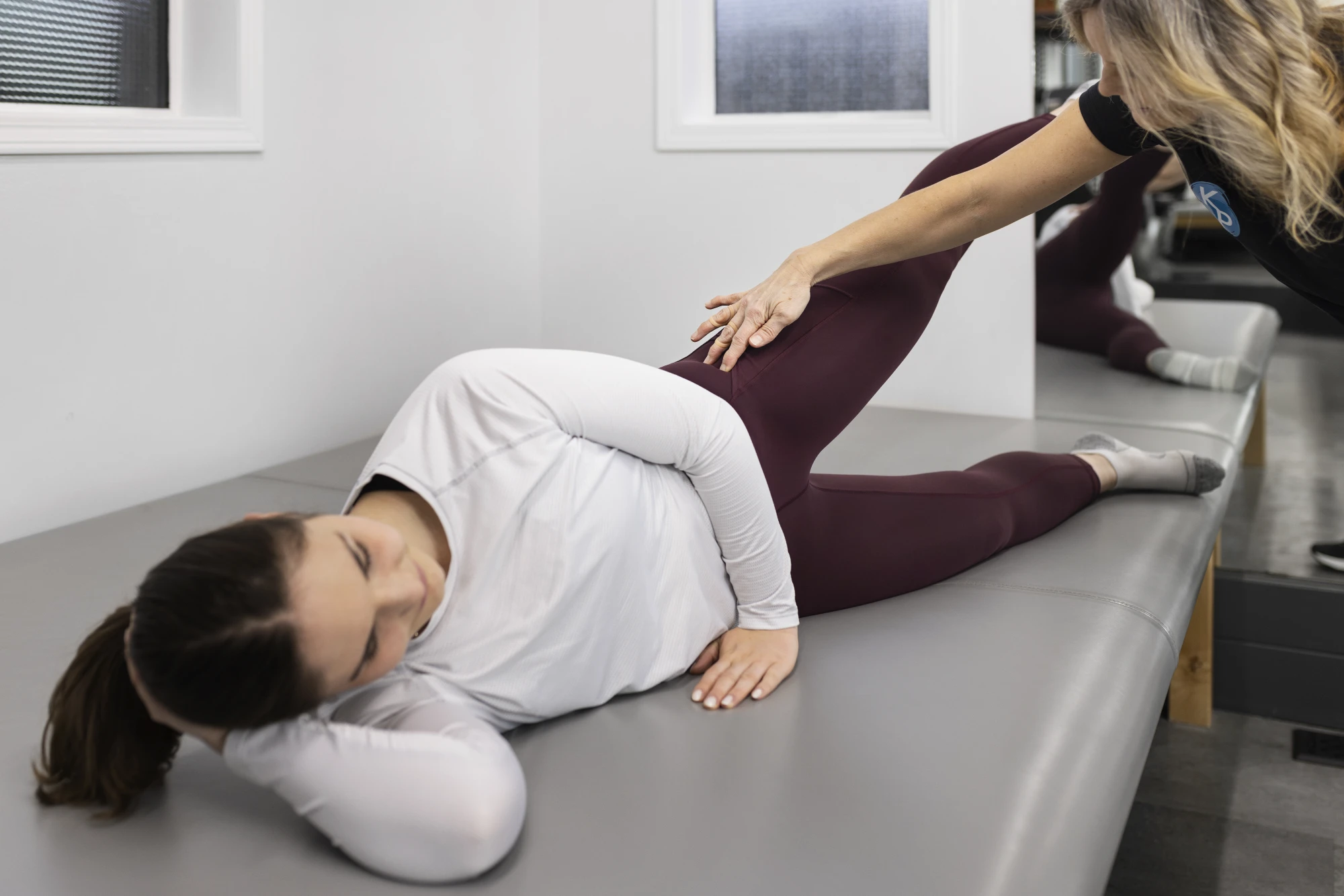
Services & Areas of Care
Browse our treatment pages for details on each service, typical conditions treated, what to expect in a visit, and who can provide it.
-
Chronic Pain Management
Chronic pain can affect how you move, sleep, work, exercise, and participate in daily life. Care starts with understanding your symptoms, what may be contributing to them, and what kind of plan can help you build function, confidence, and quality of life.
-
Dry Needling (IMS)
Dry needling uses fine acupuncture needles to stimulate tight or sensitive muscle tissue. It may be considered as part of a broader physiotherapy treatment plan when muscle tension, pain, or restricted movement is contributing to a problem.
-
Hand Therapy
Hand therapy supports recovery from injuries, surgeries, pain, and mobility issues affecting the hand, wrist, forearm, and elbow.
-
Kinesiology Supervised Exercise Programs
Kinesiology exercise programs are for people who need guided support to build strength, improve movement, progress exercises, and feel more confident with activity.
-
Manual Therapy
Manual therapy uses skilled, hands-on techniques to assess and treat joints, muscles, ligaments, nerves, and movement restrictions.
-
Massage Therapy
Massage therapy can help reduce muscle tension, manage stress, improve mobility, and support recovery from injury with tailored, hands-on treatment.
-
Neuro-Anatomical Acupuncture
Neuro-anatomical acupuncture is used by trained physiotherapists to stimulate specific acupuncture points related to nerves, muscles, and joints. It may be considered as part of a physiotherapy treatment plan for pain, muscle tension, and movement-related concerns.
-
Pelvic Floor Physiotherapy
Pelvic floor physiotherapy can help with concerns such as leakage or urgency, pregnancy and postpartum recovery, and core function through respectful, evidence-informed care.
-
Physiotherapist-Guided Exercise Rehabilitation
Physiotherapist-guided exercise rehabilitation helps restore strength, mobility, balance, and confidence after injury, surgery, pain, or a change in function.
-
Post-Concussion Rehabilitation
Concussion symptoms can affect work, school, sport, exercise, screen time, sleep, and everyday activity. Rehabilitation focuses on understanding your symptoms and helping you return to activity gradually and safely.
-
Rehabilitative Ultrasound Imaging (RUSI)
Rehabilitative ultrasound imaging, often called RUSI, uses real-time ultrasound feedback to help assess and retrain how your deep core muscles activate.
-
Running Assessment
A running assessment looks at your movement, strength, training habits, and injury history to identify factors that may be affecting comfort, efficiency, performance, or injury risk.
-
Sports Injury Rehabilitation
Sports injury rehabilitation helps you recover from sprains, strains, tendon injuries, joint pain, and other activity-related concerns with a plan focused on safe progression and confident return to movement.
-
Tele-Rehabilitation
Tele-rehabilitation gives you a way to connect with your physiotherapist or kinesiologist when an in-person visit is not practical or needed.
-
Temporomandibular Dysfunction (TMD)
TMD can contribute to jaw pain, clicking, headaches, facial tension, and difficulty opening, closing, or using your mouth comfortably.
-
Vestibular Rehabilitation
Vestibular rehabilitation helps address dizziness, vertigo, balance problems, and motion sensitivity with care that is specific to how your symptoms are affecting daily life.
Conditions Treated at Kamloops Physiotherapy
- Back and neck pain
- Sports injuries and other sprains and strains
- Headaches
- Whiplash and neck strain resulting from automobile accidents
- Vertigo, dizziness, and vestibular pathology
- Sciatica
- Postoperative joint / repairs
- Fractures/Dislocations
- Arthritis
- Osteoporosis
- Temporomandibular joint (jaw) dysfunction (TMJ)
- Repetitive strain / overuse injuries