
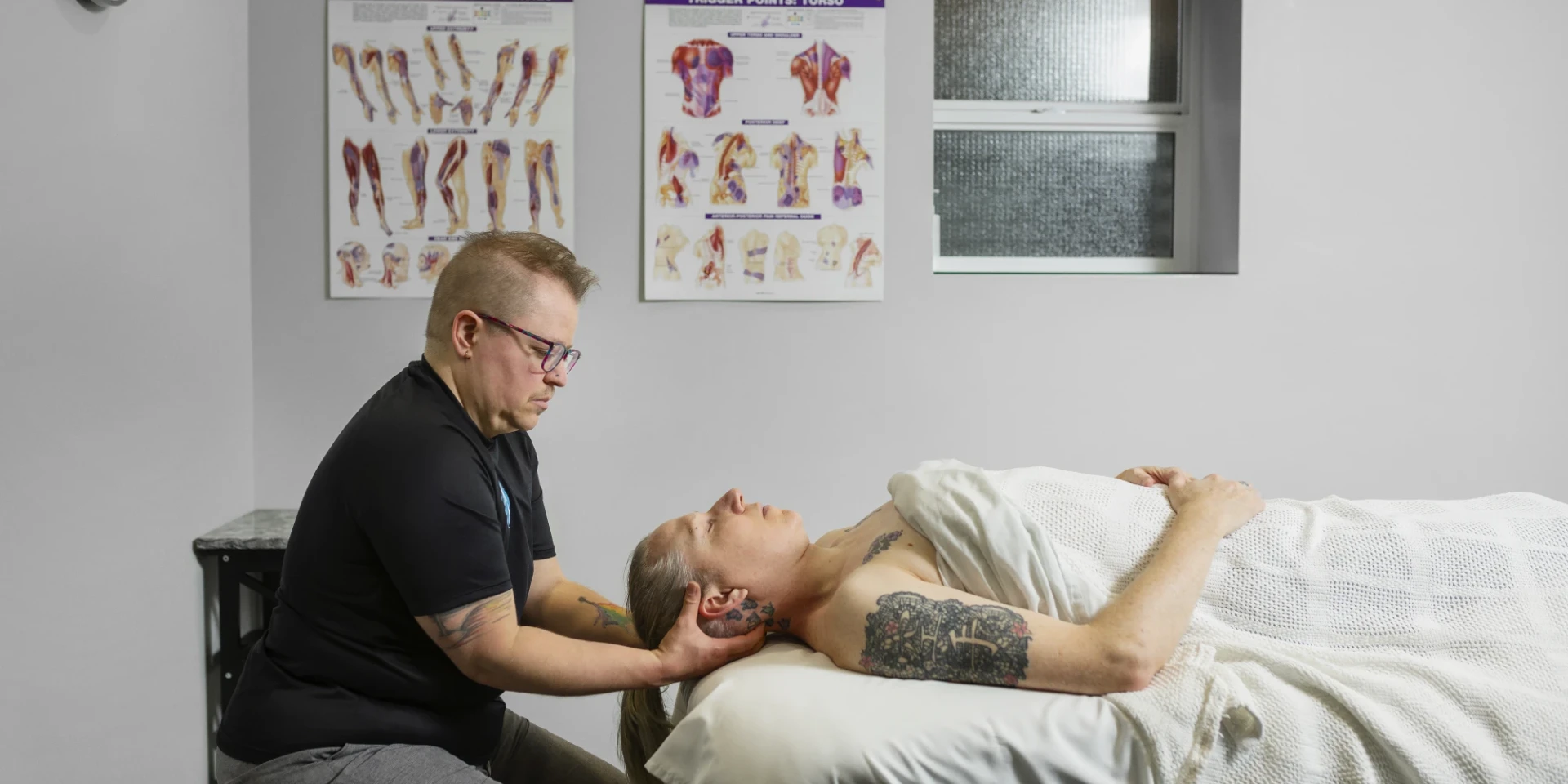
Massage Therapy
Hands-on care to ease pain, reduce stress, and support movement and recovery.
Massage Therapy Services
Massage therapy can help with pain, tension, stiffness, mobility, and recovery. Explore the services below to find the type of hands-on care that best fits what you’re experiencing and how you want to feel and move.
Have a question, need help booking, or not sure which service is right? Contact us and we’ll help you take the next step!
Meet Your RMTs
Our registered massage therapists bring strong clinical training, hands-on skill, and a practical understanding of how soft tissue care can support movement and recovery. Each RMT has their own treatment style and areas of focus, so you can choose the therapist who feels like the right fit for your needs.



Massage Therapy 101
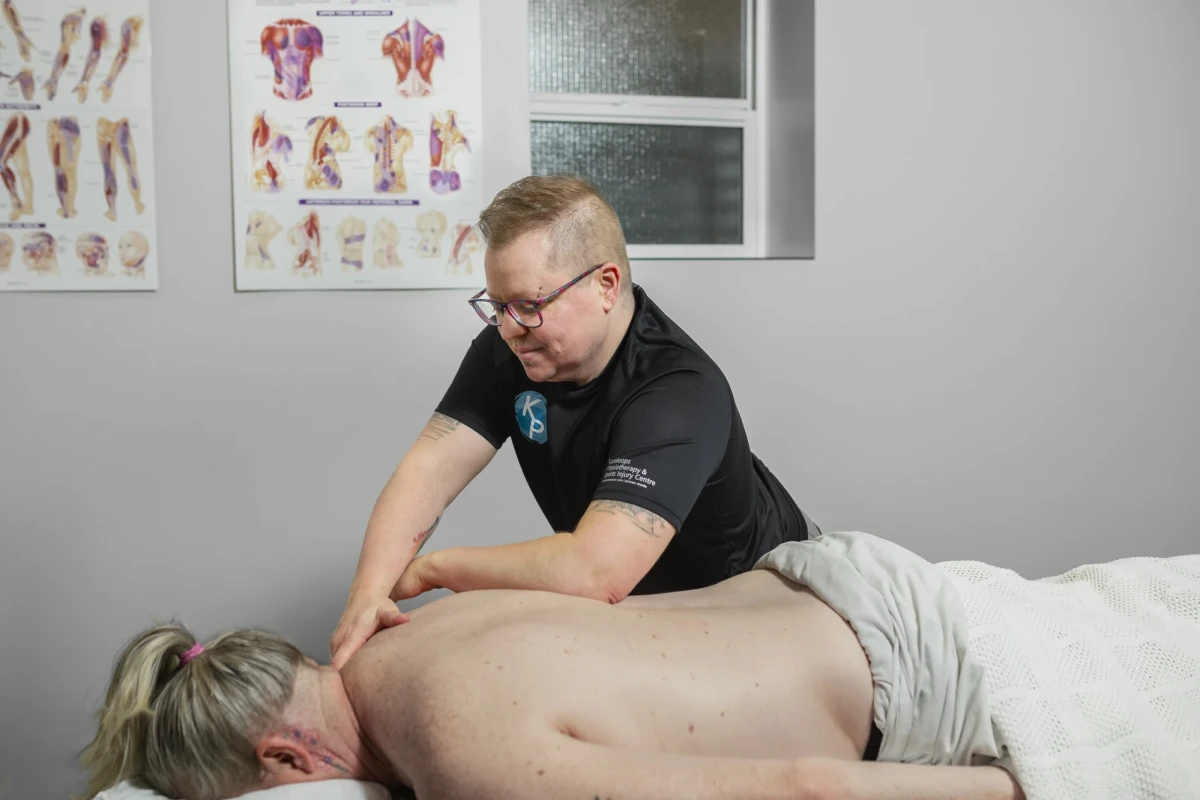
Hands-on care that supports movement
Massage therapy is more than relaxation. Your registered massage therapist will assess your needs, understand what is bringing you in, and use hands-on treatment to support how your body feels and moves.
Treatment may include soft tissue techniques, mobility work, stretching, education, home care, and recommendations to support your progress between visits. When helpful, your RMT can also work alongside physiotherapists, kinesiologists, and other care providers so your treatment fits into a broader plan.
What to Expect
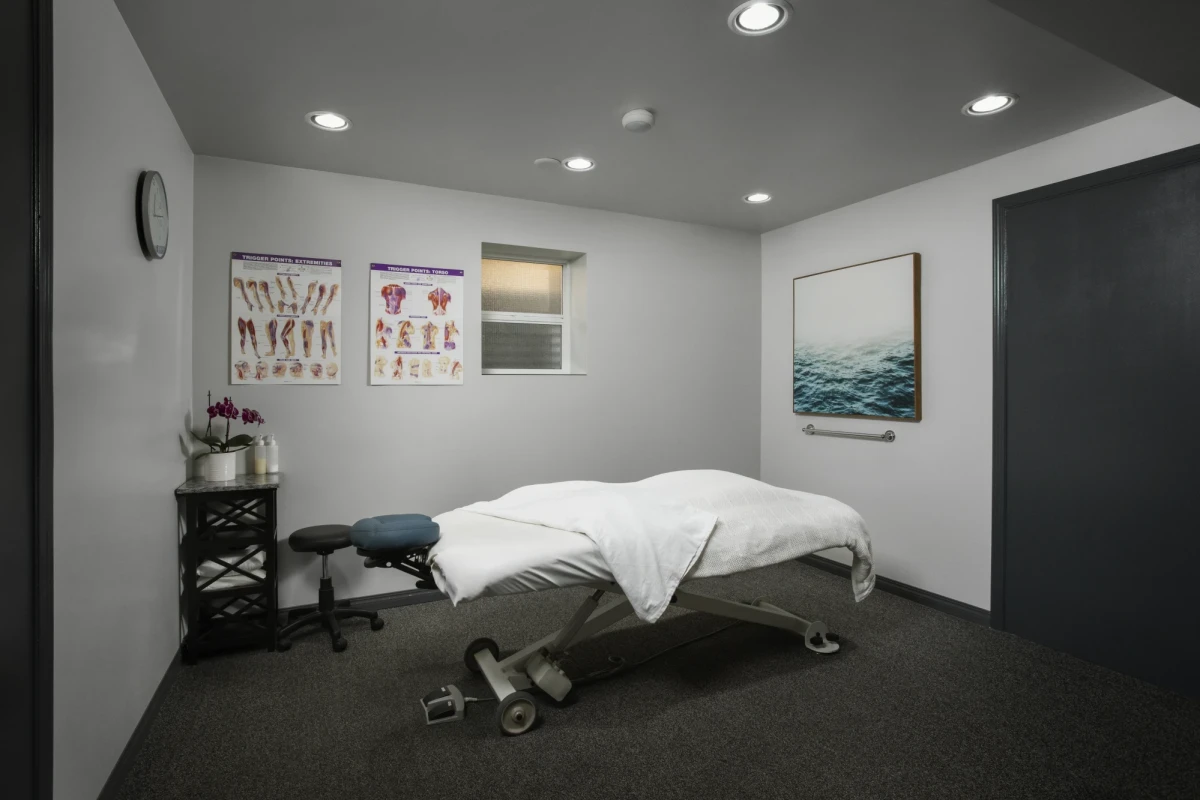
Your First Massage Therapy Visit
Your first massage therapy visit is about understanding why you’re coming in, how your body is responding, and what kind of treatment will be most helpful.
-
1
Talk through your reason for visiting
Your registered massage therapist (RMT) will ask about the reason for your visit, along with any relevant health history, previous injuries, medications, medical conditions, allergies, or other factors that may affect your care.
-
2
Assess your needs
Your RMT will complete an assessment to help guide treatment. This may include looking at muscle tone, flexibility, alignment, movement, and areas of discomfort or restriction.
-
3
Begin hands-on treatment
Treatment will be based on your assessment, comfort level, and goals. Your RMT may adjust their approach throughout the session based on how your body responds.
-
4
Support your progress
Assessment continues during treatment, and your RMT may provide home care, education, or suggestions to help support how you feel and move between visits.
FAQs
What does an RMT treat?
Registered massage therapists can help with many types of pain, tension, stiffness, and mobility concerns. People often book massage therapy for neck pain, upper or mid-back pain, low back and pelvic pain, sciatica, headaches, jaw pain, shoulder concerns, arm and hand tension, hip pain, knee pain, and lower leg or foot discomfort.
Is massage therapy only for back and neck pain?
No. While back and neck pain are common reasons to see an RMT, massage therapy can also support many other areas of the body. Treatment may help with pain, stiffness, muscle tension, limited mobility, recovery from injury, and ongoing issues that affect how you move and feel.
What techniques might my RMT use?
Your treatment will depend on your assessment, comfort level, goals, and previous experience with massage therapy. Techniques may include deep tissue massage, trigger point release, soft tissue release, myofascial release, muscle energy technique, neuromuscular technique, joint mobilization, manual traction, decompression, and other hands-on approaches.
Will I be given exercises or home care?
Your RMT may provide home care to support your treatment between visits. This could include stretches, strengthening exercises, self-care strategies, postural guidance, education, or recommendations for other types of care when appropriate.
What education do RMTs have?
Registered massage therapists in British Columbia complete rigorous training and are regulated health professionals. Their education includes assessment, anatomy, physiology, pathology, treatment planning, manual techniques, therapeutic exercise, and patient care.
This training helps your RMT assess your needs, choose appropriate treatment techniques, and adjust care based on how your body responds.
Can massage therapy be part of a broader treatment plan?
Yes. Massage therapy can work well alongside physiotherapy, kinesiology, and other forms of care. If your recovery would benefit from a team-based approach, your RMT can help support pain relief, mobility, soft tissue health, and function as part of your broader care plan.